

Welcome to a new Wildcard Wednesday! This week, I’m sharing the latest in my monthly series on midcentury Broadway comedies. For this entry, we’re once again celebrating Arlene Francis!

THE ROAD TO ROME (1927)
Logline: The clever wife of Rome’s new dictator attempts to dissuade Hannibal from besieging the city.
Author: Robert E. Sherwood | Original Director: Lester Lonergan
Original Broadway Cast: Jane Cowl, Philip Merivale, Richie Ling, Jessie Ralph, Fairfax Burgher, Joyce Carey, Charles Brokaw, Louis Hector, Barry Jones, more here
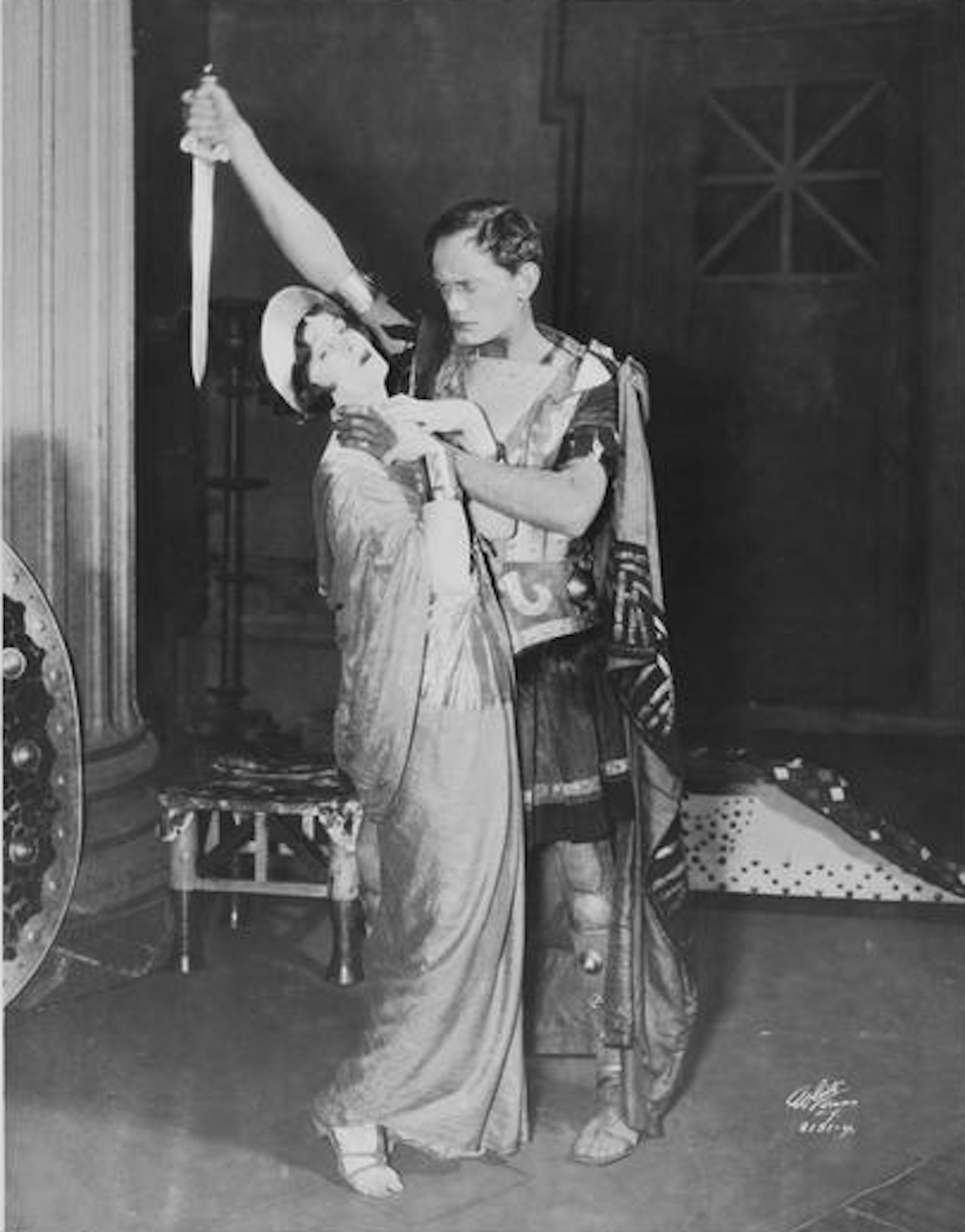
Thoughts: Robert E. Sherwood’s The Road To Rome sets out to answer the age-old question of why didn’t Hannibal seize Rome after marching on it during the Second Punic War. According to this pacifist playwright, it’s because Hannibal was capably seduced by the clever wife of Rome’s new dictator. It’s pure historical fiction — legendary decisions made because of personal human relationships — but it’s a compelling premise from an author known for his witty, rhetorically minded dialogue. Unfortunately, as a comedy, this is another text — not unlike the below Amphitryon 38 — that, at best, is amusing. Oh, there are comedic things here, like the dictator’s snobby mother, who can’t abide her son’s philosophical Athenian wife. And every now and then there’s a good snappy rejoinder that adds a laugh line to an otherwise self-important exchange. But, to me, this is more of a drama — and on those terms, I think only a half-successful one. That is, I don’t think Sherwood capably sticks the landing of his chosen dramatic scenario, for while, broadly, the idea that Rome was spared because Hannibal came to care for the brilliant and charming First Lady of Rome is both fun and understandable, the climactic scene where she both rejects him and convinces him to spare Rome under the pretense that she’s offering him some greater human nobility — submitting to life rather than conquering it — well, it doesn’t fully make sense. To me, her character — Amytis (which Arlene Francis played a few weeks in 1953 and 1955) — isn’t fully cogent because she’s a walking cliché who spouts platitudes. She’s the Ancient Roman version of the “Manic Pixie Dream Girl,” a quirky rebel who teaches men to embrace life by being fully present in the moment. Okay, in the 1920s, that stock type was still fresher and more original than she’d become, so it isn’t a critique. It’s just that without something more specific and personal to say, she comes across as more of a plot device than a true character with an actual arc. And, on those terms, she’s limited, because her argument to Hannibal of why he should spare Rome is gobbledygook — faux intellectualism that tries too hard to impress but, foundationally, is too convenient and abstract to persuade. So, his turnaround feels false — and thus the whole point of the play… doesn’t fully land.
Jackson’s Verdict: Interesting, but neither hilarious nor rhetorically persuasive.

AMPHITRYON 38 (1937)
Logline: Jupiter seeks to bed a beautiful mortal woman by taking the form of her husband.
Author: Jean Giraudoux, adapted by S.N. Behrman | Original Director: Bretaigne Windust
Original Broadway Cast: Alfred Lunt, Lynn Fontanne, Richard Whorf, Barry Thomson, Edith King, George Meader, Sydney Greenstreet, more here
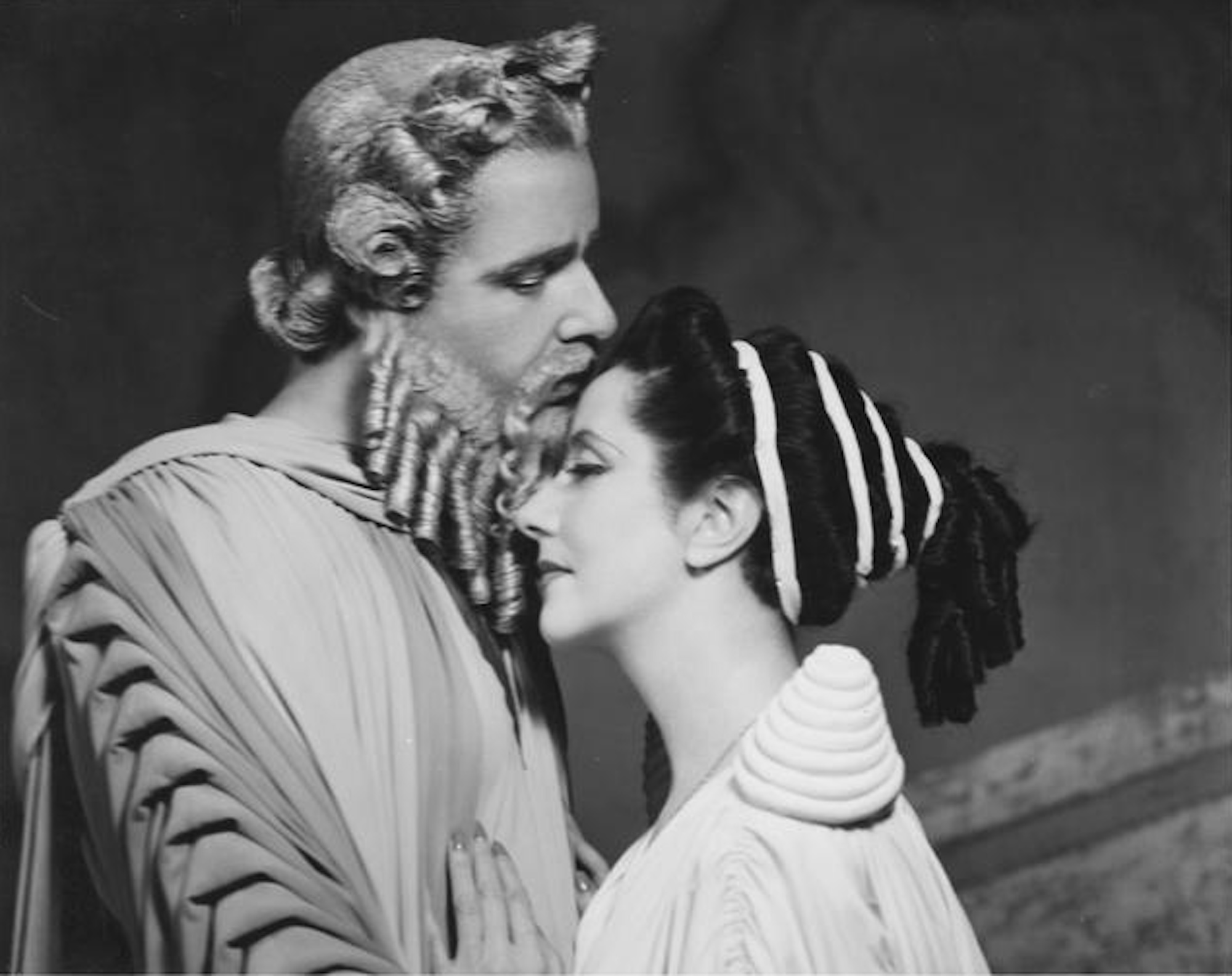
Thoughts: This is S.N. Behrman’s English translation of Jean Giraudoux’s take on the Amphitryon myth — you know, the story about Hercules’ conception, where Zeus (or Jupiter here) takes the form of a mortal man to have carnal relations with his wife Alcmene (Alkmena here). This basic idea — famously told by Roman playwright Plautus — was used to inspire the 1950 Cole Porter musical Out Of This World, which I discussed a few months ago. But the association between this play and that musical is loose — really, they only share the simple premised notion of Mercury assisting Jupiter as the latter pursues a human woman, using the body of her husband while he’s called away. Otherwise, the musical is a ribald farce, with Juno popping in as the suspicious wife, and lots of other bawdy, rom-com hijinks added for good measure — not to mention some ace Cole Porter tunes. Here, Behrman and Giraudoux offer a myth that’s actually quite romantic — with poetic dialogue and a sensitive version of the story that obfuscates some of the discomforting sexual deception via a kinder, more multi-dimensional Jupiter. Specifically, his initial interest in merely bedding the beautiful mortal woman eventually evolves into deeper feelings of love and respect — friendship, it’s called — and that turns the whole play into more of a character piece, situated on the arc of an arrogant god who means to partake in a mortal pleasure finding something much richer and more distinctly human. It’s a much more palatable dramatic experience, and certainly well-tailored to Lunt and Fontanne, who liked to play this kind of adult romantic comedy… However, speaking of “comedy,” while the text itself is clever and sometimes amusing, I wouldn’t say it’s actually funny. Certainly not on the level of the great titles covered so far in this series. That is, compared to the other material I highlight on this blog, my enthusiasm for Amphitryon 38 can only go so far. It’s a fine play, but a subpar comedy. (Incidentally, this post’s subject, Arlene Francis, played the role of Alkmena at several theaters in the summer of 1960.)
Jackson’s Verdict: A sensitive take on the Greek myth, but not terribly funny.

THE FRENCH TOUCH (1945)
Logline: A French actor during Nazi occupation tries to stage a play with his current wife and two exes.
Author: Joseph Fields & Jerome Chodorov | Original Director: René Clair
Original Broadway Cast: Brian Aherne, Arlene Francis, Jacqueline Dalya, Madeleine Le Beau, John Wengraf, John Regan, Jerome Thor, more here

Thoughts: There are flashes of Lubitsch’s To Be Or Not To Be here — but only flashes, as similar circumstances and shared themes are let down by a meandering but predictable plotting and an underlying premise that’s less dimensional than it needs to be. Here’s the gist. In Nazi-occupied Paris, a disbanded acting troupe led by the egotistical Roublard is reunited when the new Minister of Culture demands that they write and stage a pro-German play about their two nations existing harmoniously — with a mandated starring role for Roublard’s (Ruby’s) first wife and original leading lady, Jacqueline (this was Arlene Francis’ role). This, naturally, upsets Ruby’s current wife Giselle and her predecessor Odette, the latter a militant member of the French underground resistance who arrives to stop her ex from collaborating. However, she’s persuaded to take part when she realizes that Ruby has only agreed to do this play so that he and Jacqueline can surprise the opening night audience with a secret final scene that champions French nationalism and sticks it to the Nazis. And good thing too — because now the Minister of Culture insists upon all three wives appearing in the play as a fabulous gimmick. Therein lies this show’s main comedic thrust — a man trying to manage two exes and a current wife in a play where they’re all in natural competition. It’s amusing… at first. But it gets old fast, especially as the slow and increasingly clichéd plot continues to unfold and Ruby gets back with his first wife Jacqueline, they all have cold feet about doing the play, and then a real-life display of courage galvanizes the troupe into pressing forward, with the curtain coming down just as their curtain is about to go up. It’s strictly formula, and a lot less funny than it thinks it is, largely because its comic ideas are slight, lacking proper individualization from well-defined characters, not to mention the clever plotting of To Be Or Not To Be that capably sustained comic tension. Sadly, The French Touch isn’t as light as Lubitsch’s — it’s heavy, unsubtle, and ultimately, nothing special.
Jackson’s Verdict: Comedic but familiar ideas don’t fully rise to the occasion.

Come back next week for another Wildcard! And stay tuned Tuesday for Happy Endings!