
Welcome to a new Sitcom Tuesday! This week, I’m continuing my study of Arrested Development (2003-2006, FOX; 2013, 2018-2019, Netflix) by looking at the 2013 “Original Cut” of Season Four, which is currently available on both DVD and Netflix (under “Trailers & More”)!

Arrested Development stars JASON BATEMAN as Michael, PORTIA DE ROSSI as Lindsay, WILL ARNETT as Gob, TONY HALE as Buster, DAVID CROSS as Tobias, MICHAEL CERA as George Michael, ALIA SHAWKAT as Maeby, JESSICA WALTER as Lucille, and JEFFREY TAMBOR as George and Oscar. With RON HOWARD as the Narrator.
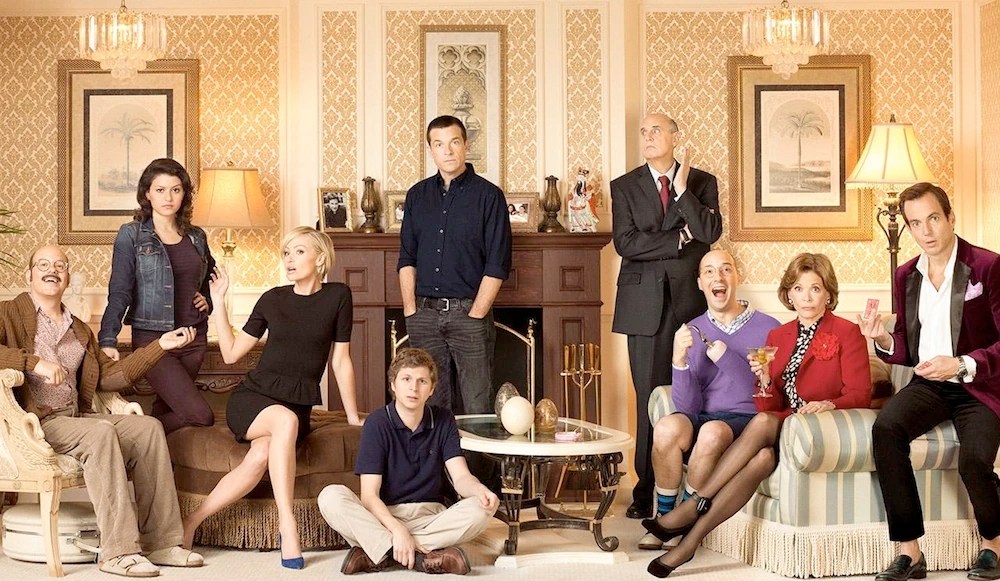
As with two other 2000s classics that were thawed after many years on ice (Curb Your Enthusiasm and The Comeback), Arrested Development’s Netflix revival mostly fails to recapture the magic of the original run. Season Four is different (even from Five) for reasons we’ll discuss, but in general, the version of the show produced for Netflix is far removed from what was produced for FOX, both because of their respective mediums, which speaks to changes between TV in the 2000s and TV in the 2010s, and also because, as usual, the long hiatus gave the show time to develop a legacy-based identity that, as with Curb and Comeback, created a big-picture reputation that becomes the show’s actual, practiced identity upon its return, and often at the expense of other, more elemental qualities that had been vital to its excellence in the first place. Indeed, everything that made Arrested Development stand out in the middle of the 2000s became synonymous with its legacy upon reflection, and that’s what’s accentuated here — a trend we first saw as the FOX run progressed, but never to this extreme, which is also more evident now because of the break. Specifically, the show’s reputation for inventive storytelling with speed and density — lots of plot! — becomes a guiding aspect of its projection of self, as does its penchant for self-referential comedy, built on in-show running gags that are understandably deployed to reinforce continuity between the classic run and this revival (where new jokes are created as well), along with a sense of forward and backward meta-awareness that, like all of this, has always been sanctioned by the single-cam mockumentary format (with narrator), which has given the series authority to basically do whatever it wants, although never before to quite this extent. Now, some things — the increased use of jokey callbacks and easter egg call-forwards in indication of a well-managed and thus intelligent command of self — I don’t find troublesome, even in the extreme, for this is self-contained stylistic gimmickry and truly self-corroborating. And as the show also becomes more media literate and winky about details beyond its own contours (like its stunt casting), its ingrained meta via the mockumentary framing ensures that such gags don’t feel out of place. There’s just more of all this and it can seem gratuitous, especially when character and premise become too peripheral.
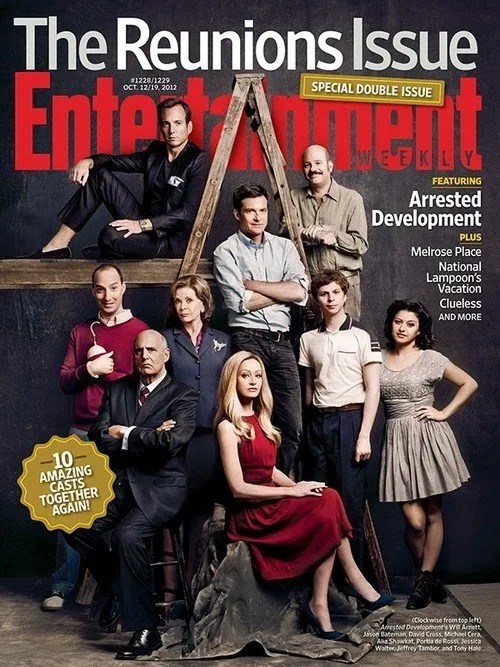
The real issue with this revival is its storytelling. This goes for both Four and Five, as they each evidence a progressively misguided over-emphasis on plot — there’s too much of it and it’s not as well-connected to the characters or the situation — while the ideas, now lacking necessary support, continue to decline in both novelty and inherent comedic value, no longer allowing this idea-driven sitcom to be as successful on its own terms. I’ll save my thoughts on Five for later, but it shares with Four the basic trajectory of this self-accelerated demise, proving that Four, though weighted by its own particulars, also exists within a trend that discredits one-off excuses — like too much relish in the new freedom provided by Netflix or the hinderance of not having all the actors able to shoot simultaneously. Those are both valid reasons Four struggles, but there’s a more macro issue, for the show thinks it’s doing something in line with its identity here — something for which it has been celebrated — and the results aren’t great. Let’s get into it. As you know, the original 2013 cut of Season Four employs a structure that creator Mitchell Hurwitz has compared to Rashomon, as all the leads are individually tracked from the 2006 finale to a present “Cinco de Cuatro” celebration, culminating in the mysterious murder of Lucille 2 (Liza Minnelli) and a question of culpability. The 15 episodes produced for this season each focus on a person (or two), but it’s not so simple, for this isn’t merely a matter of following separate perspectives and building to the same crescendo. No, there’s so much going on with everybody — lots of plot threads come and go, and sometimes intersect — and it unfolds non-linearly, both in episode order and sometimes scene order. Even by the standards of Arrested Development, it’s complicated — requiring so much attention to detail that, as with the Rita arc, too much comedic value resides in a theoretical repeat viewing. And that’s a big ask. After years of mixed reviews, Hurwitz recut this footage into a more traditional, somewhat linear 22-episode season. I’ll share more on that edit tomorrow, but I see its very existence as Hurwitz’s admission that this initial version didn’t work. Oh, sure, the re-edit was ostensibly made for syndication, but it’s now in the main collection on Netflix, while you have to hunt for the original cut. That implies disfavor for the first version, and its Rashomon conceit especially.

Now, to be fair, I do think the practical constraints placed on production via the actors’ schedules was a major obstacle and motivating factor for some narrative fragmentation, for they simply had to be shot separately. And indeed, the fact that Four has few scenes with a majority of the main cast all present is ultimately the reason we can’t call this year great, for the series’ premise revolves around a dysfunctional family, and that requires them interacting. Also, all characters are best defined in juxtaposition, so while these regulars’ basic comic personas remain (they were so well-designed in the first place), their best usage naturally occurs when they get to work together; keeping them apart is limiting. Thus, with the regulars not set up to thrive and the premise not explored well, this could never be great sitcommery… but that’s before it endures the complicated plotting that then makes it even more difficult for the leads to assert their relevance in story, pushing stylistic markers of identity to the fore instead, along with this structural gimmick that, frankly, didn’t have to exist. Just because actors were hard to schedule doesn’t mean they needed a convoluted, ostentatious storytelling that accentuates this trouble by further weakening character and premise in favor of short-term and long-term plot and the gaudy, too-clever presentation of it. That is, Four’s choice to be so jagged and non-linear is an idea-driven decision from an idea-driven series that actually jibes with its past decisions, corroborating Arrested Development’s reputation as a show with lots of story and inventive ways of telling it, only now taken to an extreme. Accordingly, this application of a bold narrative template feels like more than just a reluctant workaround — it feels like a new way the show is trying to live up to its heightened expectations, fetishizing complex, intertwining plots with payoffs and callbacks and call-forwards that can all indicate a sense of smarts via all-knowing intention. Obviously, some fans love this, finding it truly in step with Arrested’s unique charms. The problem is what’s been established: the season is not only hard to follow on the most important viewing (the first), it also discounts aspects of the situation that have always been more foundationally responsible for its excellence — namely, its characters and the premise they uphold. Misaligning these priorities reveals a lack of judgment that bears out qualitatively.
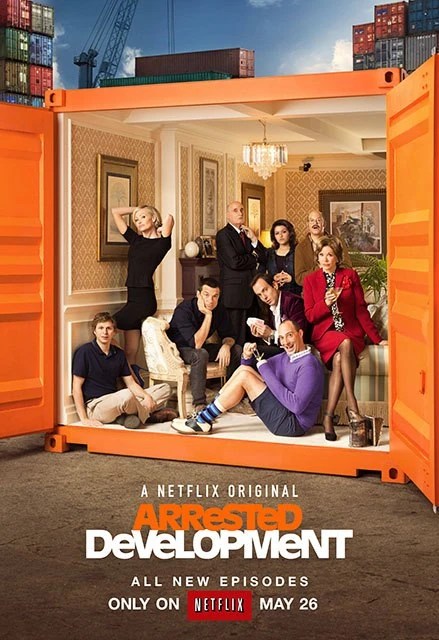
I think the show was also comfortable indulging this storytelling template because it was jumping from a traditional broadcast network to the preeminent streaming platform of the 2010s, where content was now being presented and consumed in an on-demand model, at the leisure of each viewer. Remember, Netflix was still young in 2013, but it was already evangelizing full-season drops as a unique benefit of streaming versus linear TV — we could watch as much as we want, whenever we want! — and this arrangement, which has only become more prevalent in the decade since, changes how shows are not just enjoyed, but written. In brief, they’re more long-form now with ongoing plot, for they don’t have weekly gaps that force an episodic form of storytelling via an initial episodic consumption. This may surprise — you’d think enticing a viewer to come back every week would need more long-form plotting, but individual broadcasts are naturally self-contained and thus have to be, while streaming shows, in knowing that viewers are choosing their own stops and starts, aren’t burdened by such rigidity. So, giving this model to a show like Arrested Development in 2013 was like letting a kid run wild in a candy store. Now unbound by the limitations of broadcast TV, of course it was going to overindulge, with longer episodes filled with even more jokes and more plot, and as we’ve noted, even more long-form narrative ideas not confined within individual segments. Also, being on Netflix meant it would be easier for viewers to go backwards and forwards on their own as well — an implicit encouragement now given this non-linear construct. Personally, I think encouraging repeated viewings to enhance enjoyment is something of a crutch — most people watch a show once, so it has to be great immediately. What’s more, you know I don’t love these shifts for the sitcom genre as a whole — I know big story has always been part of Arrested’s brand, but a preoccupation with long-form narrative is itself a gimmick that tends to direct energy away from the maintenance of a regular situation and the elements who either are or uphold it (the leads), de-emphasizing the link between character and plot once plot is constant and therefore self-perpetuating. And usually this makes everything more dramatic, as tension accrues higher emotional stakes when there’s less episodic resolve.

Most of those shifts in the genre en masse are applicable to Arrested Development, with a big exception: the trend towards drama. Fortunately, Hurwitz knew this show’s humor was equally seminal to its identity, so Four does as much to cram itself full of gags as it does to sell its stunty narrative template. In fact, the comedy keeps this year afloat — there are many hilarious ideas in Four that are worthy of this series’ standard (unlike Five). However, the batting average isn’t as high, for some ideas are funnier or more character-based than others, mostly because some characters are funnier or better-defined, which becomes even clearer in isolation. You’ll see on my list who I think more often gets the most comedically memorable and series-validating stuff, but I also want to point out, again, there’s similarly an uptick in self-referentiality, as jokes call back to past jokes that reinforce continuity or call ahead to new ones that this non-linear plotting now makes easier. Many Arrested Development devotees adore that sensibility, and this season has since become more celebrated by those who’ll defend it as an accurate display of the series’ ethos (with the benefit of repeat viewings, mind you). There are also more metatheatrical winks — self-awareness beyond just the show itself. This, I reiterate, has always been sanctioned by the mockumentary format, but it becomes narratively explicit with Michael’s efforts to get his family to sign off their rights so Ron Howard can produce a film based on them. Obviously, Howard is also the narrator — and quite busy this year, as this overly-complicated storytelling demands he do more heavy-lifting to explain what’s going on, leaning further into the power of the mockumentary setup and confirming how the year’s narrative gimmick is aiming to reflect Arrested Development’s reputational distinction, for better and for worse — but it’s also an allusion to the fact that Hurwitz was actually hoping to do a forthcoming feature film. That movie never happened — instead there was a Season Five, which I’ll discuss next week… In the meantime, Arrested Development’s 2013 revival is an ambitious endeavor with some good ideas but a difficult overlying gimmick that seems to suggest it’s prioritizing certain elements of its identity over others — thereby exacerbating poor conditions for sitcommery. There’s still plenty to enjoy… you just have to know where to find it.
01) Episode 57: “The B. Team” (Released: 05/26/13)
Michael attempts to get a film made about the Bluth family.
Written by Mitchell Hurwitz & Jim Vallely | Directed by Troy Miller & Mitchell Hurwitz

There are funnier and/or more memorable episodes this season, but this excursion is a better, more important ambassador. For one, it’s Michael-focused, and since he’s the strongest anchor because he was the protagonist of the situation as established on FOX, his centralization is automatically more identity-affirming (and indeed, this season suffers for not having Michael as regularly centralized). Additionally, it’s big on the metatheatrical story engine that provides an excuse for Michael to reconnect with his family — he needs them each to sign away their life rights so he can work with Ron Howard to produce a movie about them. It’s a key storyline because it involves the meta in the show’s very bones, and it encapsulates the increase in self-awareness that colors this season, even beyond this installment, which also boasts the return of Kitty (Judy Greer), the continuity of Maeby’s previous career as a Hollywood exec, and many celebrity cameos that indicate Four’s heightening of this always-present trait.
02) Episode 58: “A New Start” (Released: 05/26/13)
Tobias searches for meaning after his split from Lindsay.
Written by Dean Lorey & Jim Vallely | Directed by Troy Miller & Mitchell Hurwitz

Lindsay’s shows tend to be among the season’s weakest for a variety of reasons (mainly her character and their chosen ideas), but Tobias has always been one of the series’ funniest figures, and I thought it appropriate to get at least one of his segments here — the most amusing of the lot, as we follow Tobias’ early relationship with DeBrie Bardeaux (Maria Bamford, later of Mitchell Hurwitz’s Lady Dynamite), one of the series’ boldest recurring players and someone who helps define this season and some of its bigger comedic notions. Also, this offering climaxes in a memorable centerpiece where Tobias is mistakenly busted as a sexual predator — a theme that becomes a running gag this year with several of the characters and in several big moments.
03) Episode 60: “Colony Collapse” (Released: 05/26/13)
Gob finds new friends after he loses his family and his fiancée.
Written by Mitchell Hurwitz & Jim Vallely | Directed by Troy Miller & Mitchell Hurwitz

Gob is another character who’s always been among the series’ most reliable laugh-getters, and both installments heavily focused on him are clear standouts. This is the first of the two, which follows his relationship with Ann (Mae Whitman), perhaps the personification of this series’ love for running gags — someone whose inclusion elevates the reboot because of the continuity she allows and the nostalgia she invokes, connecting the original run and the revival while reinforcing the situation, where she’s something unique to Arrested Development. Additionally, the highlight of this half hour is a memorable centerpiece in which Gob plans another magic trick for his wedding to Ann, and it naturally goes awry. This is a lot of ridiculous foolishness, but it’s supported by our history with the character and makes for the kind of big-idea comedy that acquits Season Four as still being a contender — not quite as consistent as the FOX years, but really excellent on occasion, and much better than what’s ahead.
04) Episode 64: “A New Attitude” (Released: 05/26/13)
Gob’s attempt to get revenge on Tony Wonder takes an unexpected turn.
Written by Mitchell Hurwitz & Jim Vallely | Directed by Troy Miller & Mitchell Hurwitz

My choice for this season’s Most Valuable Episode (MVE), “A New Attitude” is the year’s second Gob-oriented excursion and it’s got even funnier, bolder, wilder ideas than the previous, largely as a result of a central notion that finds his character in a plot to get one up on his perennial magician nemesis, Tony Wonder, a notable guest from the FOX run who reappears and is still played with comic intensity by a committed Ben Stiller. Arnett and Stiller are hilarious together and the continuity of the tricksters’ known rapport goes a long way in tying their big laughs to something previously established in the situation — their relationship, utilized now in a genuinely new and freshly comedic manner, as their fake romance turns into a real one, heightening the character stakes and the anticipated humor. Additionally, I think the entry does a good job tethering Gob to other aspects of the situation as well, via Michael, as their own sibling rivalry flares up in a misunderstanding, with another memorable centerpiece when the two brawl in a children’s ball pit. It’s the kind of big idea that speaks to Arrested Development’s courage and its prioritization of yuks, which is something that makes it special and, here, is also well-attached to character, and by proxy, the premise (a rarity this season).
05) Episode 65: “Señoritis” (Released: 05/26/13)
Maeby seeks to reignite her career after she burns out in Hollywood.
Written by Jim Brandon & Brian Singleton | Directed by Troy Miller & Mitchell Hurwitz

As we get closer to the end of the season and the narrative climax that certain half hours have been showing us bits of all year, we also start to see more of the characters who haven’t yet been spotlighted — namely Maeby, George Michael, and Buster. Their segments tend to be pretty good by Four’s standard, for there’s more of a straightforward focus now that we’re basically following one person from 2006 to 2012, and the missing pieces from the plot are also being filled in, thereby yielding some delayed clarity (this delights some viewers and irks others). But Maeby’s offering is particularly worth citing because it’s the funniest and best-paced self-contained exploration of a character this season — and that’s a credit to Maeby’s definition, one of the foundational aspects of Arrested that enables Four’s basic gimmickry to not totally fail.
06) Episode 66: “It Gets Better” (Released: 05/26/13)
George Michael finds himself too deep into a lie about a fake anti-piracy software company.
Written by Dean Lorey & Richard Rosenstock | Directed by Troy Miller & Mitchell Hurwitz

Although I hoped to find room on this list for Buster’s episode, I have to include at least one showing for George Michael, another one of the series’ most well-drawn characters and someone who’s vital to the situation, for his bond with his dad is something that inherently reminds us of the dysfunctional family premise, as Michael the “straight man” gains comedic and dramatic dimension through mistakes he makes with his own son. Four’s premiere and finale both have strong centerpieces for the Michael/George Michael relationship that are funny and situation-connected, but this long-needed catch-up for the latter sets up the ending (with its Rebel Alley triangle) and is faster and funnier, mostly due to its self-contained character goals.
Other notable episodes that merit mention include: “Off The Hook,” the aforementioned Buster entry, which is very funny, along with “Flight Of The Phoenix,” the premiere that has some good father/son stuff for Michael and George Michael and a classic centerpiece that’s called back to in the finale, hampered only by the unique storytelling structure that is especially confusing here and not yet paying off, “Blockheads,” which caps off the season with a welcome focus on Michael and George Michael, and “Smashed,” the year’s second Tobias-led outing, which also guests Tommy Tune as Lucille 2’s brother, Argyle Austero.

*** The MVE Award for the Best Episode from Season Four of Arrested Development goes to…
“A New Attitude”

Come back next week for Season Five! And stay tuned for thoughts on the recut Season Four!
Didn’t like either version of Season 4. But it’s better than Season 5 I guess.
Hi, MDay991! Thanks for reading and commenting.
Stay tuned for my thoughts on Season Five — coming soon!
I really did not like this season when it first premiered but you’re right that it improves on additional viewings. I wish the cast was all in the same room more often but I like some moments. Great essay as usual.
Hi, Ian! Thanks for reading and commenting.
Glad you enjoyed this post!
So I have the unique experience of watching the remix 22 episode version before the original and I SO much prefer the original! I think it helped that I sort of knew what was happening and wasn’t confused but this version was so much more fun and interesting. It’s not the best season (compared to Fox) but I think it’s much better than the remix. I don’t know if people who watched the original first feel that way.
Hi, esoteric1234! Thanks for reading and commenting.
It seems there are mixed reactions to both versions of Season Four, but I’ve noticed a lot of ARRESTED DEVELOPMENT devotees who also prefer the original cut. Personally, I think I do as well — if only because the “remix” doesn’t end up being much of an improvement!