
Welcome to a new Wildcard Wednesday! This week, I’m sharing the latest in my “potpourri” series on midcentury Broadway plays, specifically comedies, that I’m reading for (mostly) the first time. In this entry, I’ve selected three 1930s spoofs of Hollywood and the cult of celebrity!

ONCE IN A LIFETIME (1930)
Logline: Three vaudevillians go to Hollywood with the idea of opening an elocution school.
Author: George S. Kaufman & Moss Hart | Original Director: George S. Kaufman
Original Broadway Cast: Grant Mills, Jean Dixon, Hugh O’Connell, Spring Byington, Charles Halton, Sally Phipps, George S. Kaufman, and more
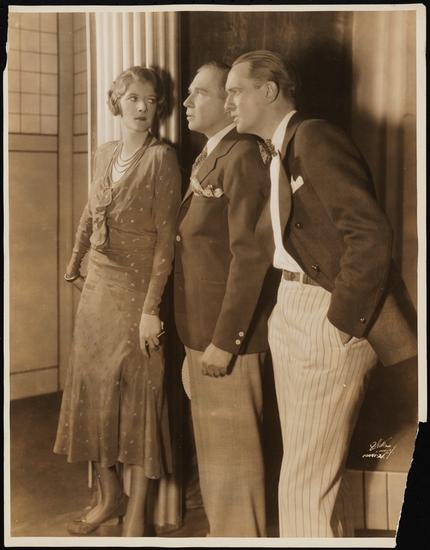
Thoughts: The first of many collaborations between George S. Kaufman and Moss Hart, Once In A Lifetime is probably the first great theatrical comedy about Hollywood, and certainly as it existed in the 1930s, at the height of the studio system’s power and mystique. With direct spoofs of real people in the industry, and a parodic look at the medium’s frenzy during its transition from silents to sound (which has inspired so many works in the decades since), it genuinely became a touchstone and template for how others could do this kind of play going forward. Oh, yes, there had been Hollywood lampoons before (like Kaufman’s Merton Of The Movies), but never with such piercing accuracy or comic insight, rooted in a greater basis of observational truth. So, as Hollywood sendups go, this is definitely a formative masterwork. As Kaufman and Hart plays go, well, it’s a fine entry to their catalogue but not their best, for beyond the jokey big characters who help earn the satire, the main trio of best friend vaudevillians aren’t as distinct or well-rendered as the figures in some of this esteemed duo’s smartest offerings. They’re each a little convenient and vague, especially the leading lady’s male love interest. What’s more, although the plot’s got some strong comic scenarios throughout, there’s always a lot of talky setup, much of which can feel fatty and incidental to the central relationships that are supposed to provide the piece its dramatic arc and emotional center. This is a problem because the play clearly supposes that it has substantive character weight, so when notions of, say, someone having “gone Hollywood” come up rather hastily and without proper motivation, it looks a little bit like a reach. That said, if Once In A Lifetime isn’t as artful as maybe it wants to be, it still has much charm, infused with the sense of laugh-seeking wit that typifies all the major Kaufman and Hart efforts. This charm is maintained in Universal’s 1932 film adaptation, which is a pretty accurate sample of the stage play, and their combined reputation has kept the show occasionally performed (in spite of its big-budget demands). I get why; compared to the other plays in this post, it is the most on-the-nose comedy about the industry from this period — a classic.
Jackson’s Rating: 6.5/10

PERSONAL APPEARANCE (1934)
Logline: A movie star flirts with a gas attendant when her car breaks down at his fiancé’s home.
Author: Lawrence Riley | Original Director: Antoinette Perry
Original Broadway Cast: Gladys George, Eula Guy, Otto Hulett, Philip Ober, Merna Pace, Minna Phillips, Florence Robinson, Don Shelton, John Robb, Dorrit Kelton, and Leonard Penn

Thoughts: This is the only play here not actually set in the nation’s film capital, instead bringing Hollywood out to the people. Accordingly, its satire of the industry is mostly confined to the personification that exists via one diva leading lady, along with the general reaction to her celebrity — and to the movies at large — by “ordinary” folks. Its funniest stuff comes not just from the starlet who sparks the story, but also from these supporting players who are obsessed with motion pictures and all the glamour they suggest. To that point, the play boasts several strong characters who sell Personal Appearance as a worthy comedy (e.g., a wisecracking press agent and a goofball secondary couple), offsetting some of the weaknesses otherwise revealed by its plotting, and specifically a final third that slows things down enough for us to observe cracks in the proverbial foundation. Frankly, the entire comic premise — our mounting fear that the starlet is going to steal the small-town guy away from the small-town girl — maxes out at the climax in Act Two (when the noble hero finally stands up to his jerky would-be mother-in-law and decides to go off to Hollywood with the lusty diva who’s trying to seduce him), for unless he’s fully willing to jilt the obvious love of his life for this siren (which he clearly isn’t, mother-in-law or not), the jeopardy is therefore false; no matter if he goes to Hollywood, he’ll still love his girl back home. And this tension-deflating certainty is reiterated throughout the tedious remainder of the play. In that regard, while it’s fun to see some of these characters interact, the show’s basic idea, crystallized as the action progresses, undercuts them. And although it’s quite jokey and successful on comedic terms, it’s not as clever or well-written as most of the best comedies from this period — that is, there’s not the kind of exceptional style that can sometimes elevate good plays into great ones. Interestingly, Paramount’s 1936 film adaptation was rewritten to accommodate Mae West, who brings a style of her own (and a cheeky new title: Go West, Young Man), but the story problems remain and its script also isn’t funny enough to compensate.
Jackson’s Rating: 5/10

BOY MEETS GIRL (1935)
Logline: Two Hollywood screenwriters turn an unmarried waitress’ baby into a movie star.
Author: Bella Spewack & Sam Spewack | Original Director: George Abbott
Original Broadway Cast: Allyn Joslyn, Jerome Cowan, Royal Beal, Joyce Arling, Charles McClelland, Everett H. Sloane, James MacColl, Garson Kanin, and more

Thoughts: Boy Meets Girl was one of the Hollywood satires that followed in Once In A Lifetime’s footsteps as a loud lampoon of the movie industry seemingly inspired by some real people and true events, and upon its debut, it was indeed compared to Kaufman and Hart’s earlier hit. However, it’s got a totally different plot and a unique tonal sensibility of its own, with a broader, more heightened narrative idea that enables more silliness — centered around a pair of screenwriters who decide to turn an unmarried commissary waitress’ new baby into a movie star. Additionally, the text has a greater sense of direct satire, as authors Sam and Bella Spewack based so much of the material on their personal experiences at MGM. In that regard, it’s bolder — with its comedy and its parodic wink. However, to both its credit and its detriment, it doesn’t try to be anything more than a farce — there’s no sincere character moments or any dramatic thesis that the piece wants to use its satire to explore or impress upon the audience. It’s merely mocking the movies and the system that makes them, asking us to enjoy a fairly straightforward, but again, bold and therefore caricatured, window into that world. And because it doesn’t make the character claims of Once In A Lifetime, it doesn’t set itself up to fail with them, for its caricatures can exist in broad strokes without the toil of reaching for more. This is fine, except that not all the players are as comedically well-rendered. In particular, the story’s main lovebirds lack the comedic bite of everyone around them, making their scenes, and the inevitable engine of their ultimate union, a weaker element of the plot overall. And yet, because of the authors’ explicit criticism of the clichéd “boy meets girls” structure, there’s perhaps a self-aware intentionality behind some of this potential banality — a preemptive excuse for hokum that doubles as a corroboration of satire… Well, maybe I’m reaching now, for Boy Meets Girl is easy and jokey, even in Warner Brothers’ somewhat overbearing 1938 film adaptation, but there’s nothing brilliant or insightful here by design. It’s just plain fun. That’s the point.
Jackson’s Rating: 6.5/10

Come back next week for a new Wildcard! And stay tuned Tuesday for more sitcom fun!