
Welcome to a new Wildcard Wednesday, on a Tuesday! This week, I’m sharing another entry in my series on midcentury Broadway plays, specifically comedies, that I’m reading for (mostly) the first time. Below are three notable titles from the early 1960s — all later adapted into films.

PERIOD OF ADJUSTMENT (1960)
Logline: A frustrated newlywed reconnects with his war buddy, who’s having his own problems.
Author: Tennessee Williams | Original Director: George Roy Hill
Original Broadway Cast: James Daly, Barbara Baxley, Robert Webber, Helen Martin, Esther Benson, Nancy R. Pollock, Lester Mack, Charles McDaniel, Rosemary Murphy
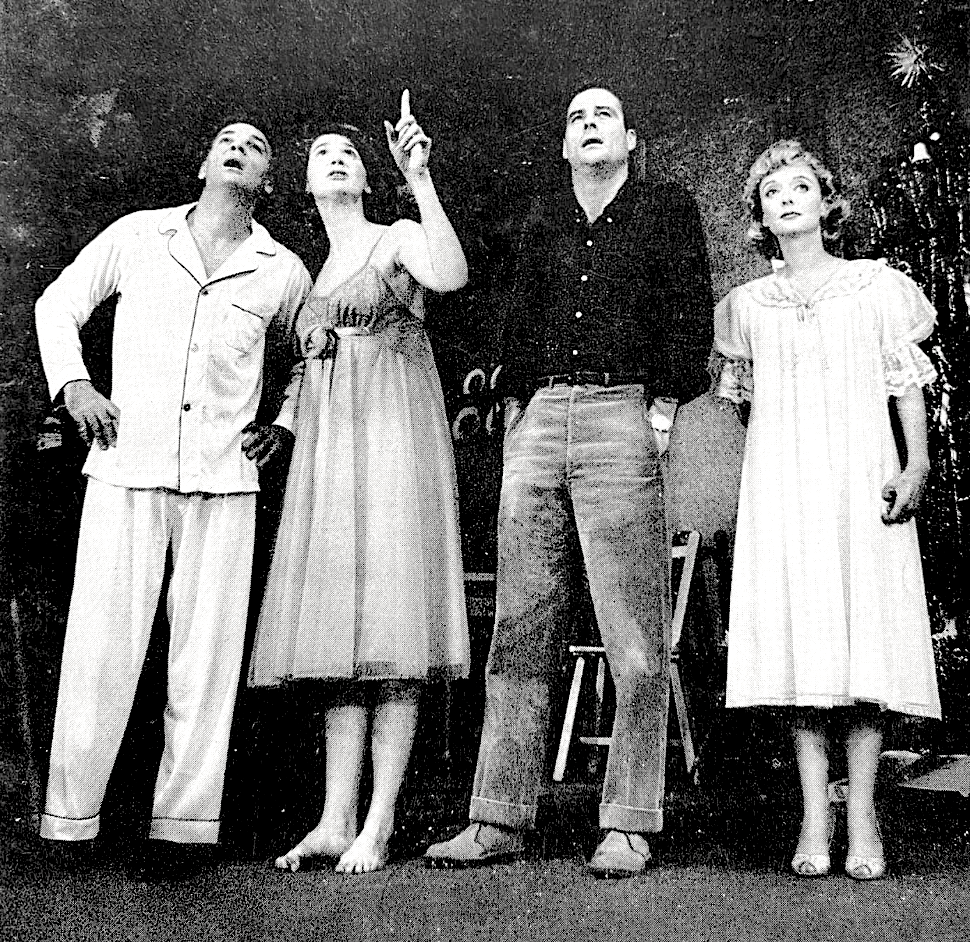
Thoughts: Although not quite a popular play, Period Of Adjustment has the distinction of sitting within the Tennessee Williams canon, where it’s an especially interesting piece for the author, evidencing his basic stylistic tenets but without the overbearing sense of tragedy that typically makes his great plays resonant and his bad plays obnoxious. He called it a “serious comedy,” and indeed, it’s tonally liminal like a dramedy, avoiding tragic narrative turns while also refusing to contort itself comedically for boffo laugh-out-loud moments. The result is a mild comedy, or a light drama — with heavier themes but a few chuckles and a happy ending. In that regard, it’s not quite competing on the same terms as the obvious comedies below and elsewhere in this series of posts. And yet, I include it because it’s a solid work of craftsmanship, boasting two well-drawn characters in Ralph and George, the war buddies who are at different “periods of adjustment” in their relationships — one is newly married, the other is newly separated — and a simple plotting that evolves them both without being too heavy-handed… Now, I must admit that all the other characters around them are a little convenient or one-dimensional — the women, in particular — but the plot’s focus keeps this from being a glaring weakness that undermines the action. Additionally, while I must reiterate that the show’s not a laugh riot by any means, the specificity of Williams’ dialogue and the general timbre of many conversations (even with some weighty PTSD angst and the author’s typical fondness for litigating repressed sexual tensions), allows Period Of Adjustment to feel like it could be skewed in a more humorous direction by crafty performances that play the human gravitas of the text with an eye towards personal foibles, and the lighter, more trivial quirks that enable both relatability and comedy. The 1962 movie version never manages to navigate the piece’s tonal unsurety and it’s a bit of an unexciting mess, but I have faith that the right production could elevate this nevertheless unique, fascinating play by one of the 20th century’s most well-known theatrical auteurs.
Jackson’s Rating: 6.5/10

COME BLOW YOUR HORN (1961)
Logline: A swinging bachelor takes his younger brother under his wing, upsetting their parents.
Author: Neil Simon | Original Director: Stanley Prager
Original Broadway Cast: Hal March, Warren Berlinger, Lou Jacobi, Pert Kelton, Sarah Marshall, Arlene Golonka, Carolyn Brenner
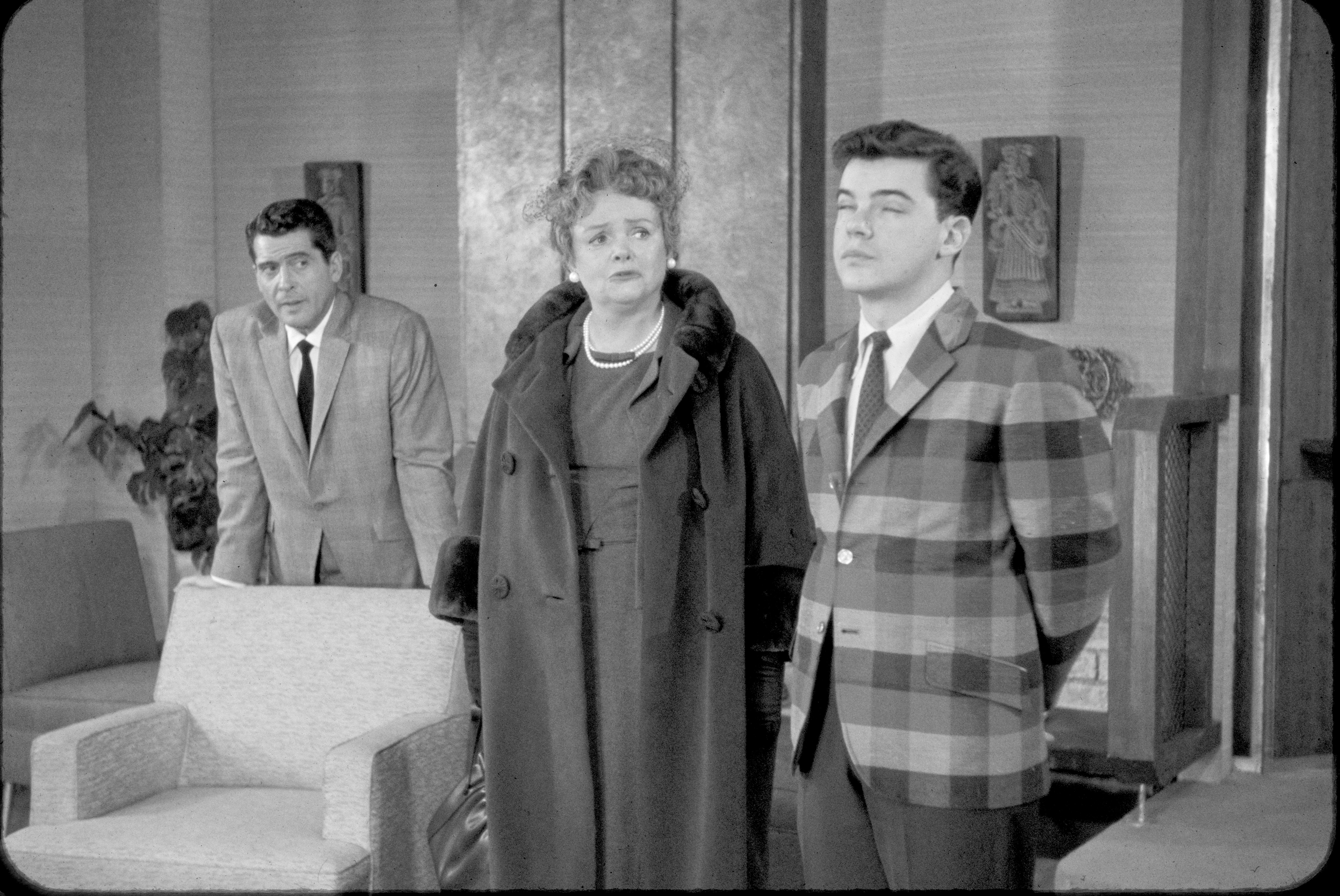
Thoughts: Neil Simon’s first full-length play was the opening salvo for his takeover of the 1960s, during which his long-running hits like Barefoot In The Park (1963) and The Odd Couple (1965) had such a wide-reaching influence in so many similar or derivative works on both stage and screen (including the sitcom genre) that Simon’s own style basically became synonymous with the Broadway style at large — comedic sophistication and thematic modernity, largely examining urban-set young and/or single characters whose interpersonal relationships, often romantic (but not always), were centralized as their primary source of comedic and dramatic tension, and in scripts propelled by quippy laugh-cognizant dialogue. This makes sense; Simon had primarily been a TV writer before 1961, so his Broadway works capitalized on his mind for jokes, but with simple, stageable plots that put different people in deliberate juxtaposition, or relation, to one another. In other words, his style was low-concept and relationship/character-driven… exactly what I like in the sitcom genre (and all comedy, quite frankly). So, it’s no surprise I love Neil Simon… even now, when his sensibility has become so ubiquitous that his comedy is no longer as potent, I still value his way of crafting characters and contrasting them for conflict. In fact, that’s what works best about Come Blow Your Horn, where two unalike brothers both evolve because of their association — the carefree bachelor matures into commitment and responsibility, while the younger dweeb steps into his own independence. As with the above Williams play, everyone else is underwritten compared to the two leads (especially the women), but the show’s narrative focus allows it, especially because their arcs are well-handled, and with plenty of laughs… That said, the funniest moment in the play — recreated in the stagey, weird 1963 film adaptation with a miscast Frank Sinatra — is the mother’s efforts to answer her son’s ringing phones and remember the messages. It’s but one example of Simon’s comedic proficiency, and with a simple theatricality that would reverberate in every medium and genre, including the one I love best. Come Blow Your Horn is a nascent effort for this influential master, but it’s a sample of his brilliant, soon-to-dominate ethos.
Jackson’s Rating: 7/10

NEVER TOO LATE (1962)
Logline: A middle-aged couple’s surprise pregnancy shocks the family.
Author: Sumner Arthur Long | Original Director: George Abbott
Original Broadway Cast: Paul Ford, Maureen O’Sullivan, Orson Bean, Fran Sharon, Leona Maricle, House Jameson, John Alexander, Wallace Engelhardt, Ed Griffith

Thoughts: Never Too Late is an amusing affair because it boasts an inherently comedic logline — a married duo well past the age of 50 learns that another baby is on the way — and it’s penned by Sumner Arthur Long, a scribe with a slight sitcom pedigree that helps ensure punchy dialogue and basically amusing scenarios. On the simplest of terms, I can see this being considered a basic success — it should make you laugh, especially with funny performers like Paul Ford (from The Phil Silvers Show) and Orson Bean keeping up a high energy, as they did in the original production (which ran for over 1000 performances). But… it’s not technically a well-made play. Its primary characters are not as fully formed as they should be (compared to say, the main duos in both Period Of Adjustment and Come Blow Your Horn) and the story is incredibly slight and aimless with nowhere to go outside of its easy setup, resorting instead to clichéd husband/wife drama that doesn’t sound well-motivated because of their somewhat clichéd renderings (the pregnant wife is especially banal) and father-in-law/son-in-law banter that, well, functions more like incidental jokes than anything truly relevant for the leads and their exploration. It’s all affable for the reasons stated above, but in terms of character and story, it’s strictly middling or worse. I feel about it as I felt watching the 1965 film adaptation — this is fun because of the stars (Ford especially) and the very concept, which plays as lightly mirthful via the sexual mores and gender roles of the older generation in the 1960s, even though there’s not much foundational substance or comedic insight. I suppose I’d still like to see it staged — it was such a big commercial hit in the early 1960s and truly seems to reflect its era… but the text itself is just fundamentally limited, so I’m afraid it’s the weakest of this week’s titles.
Jackson’s Rating: 6/10

Stay tuned tomorrow for the start of my look at The New Adventures Of Old Christine!