
Welcome to a new Wildcard Wednesday! This week, I’m sharing the latest in my monthly series on midcentury Broadway comedies. For this entry, I’m featuring three plays by Rachel Crothers, one of the most prolific female playwrights from the first half of the 20th century!

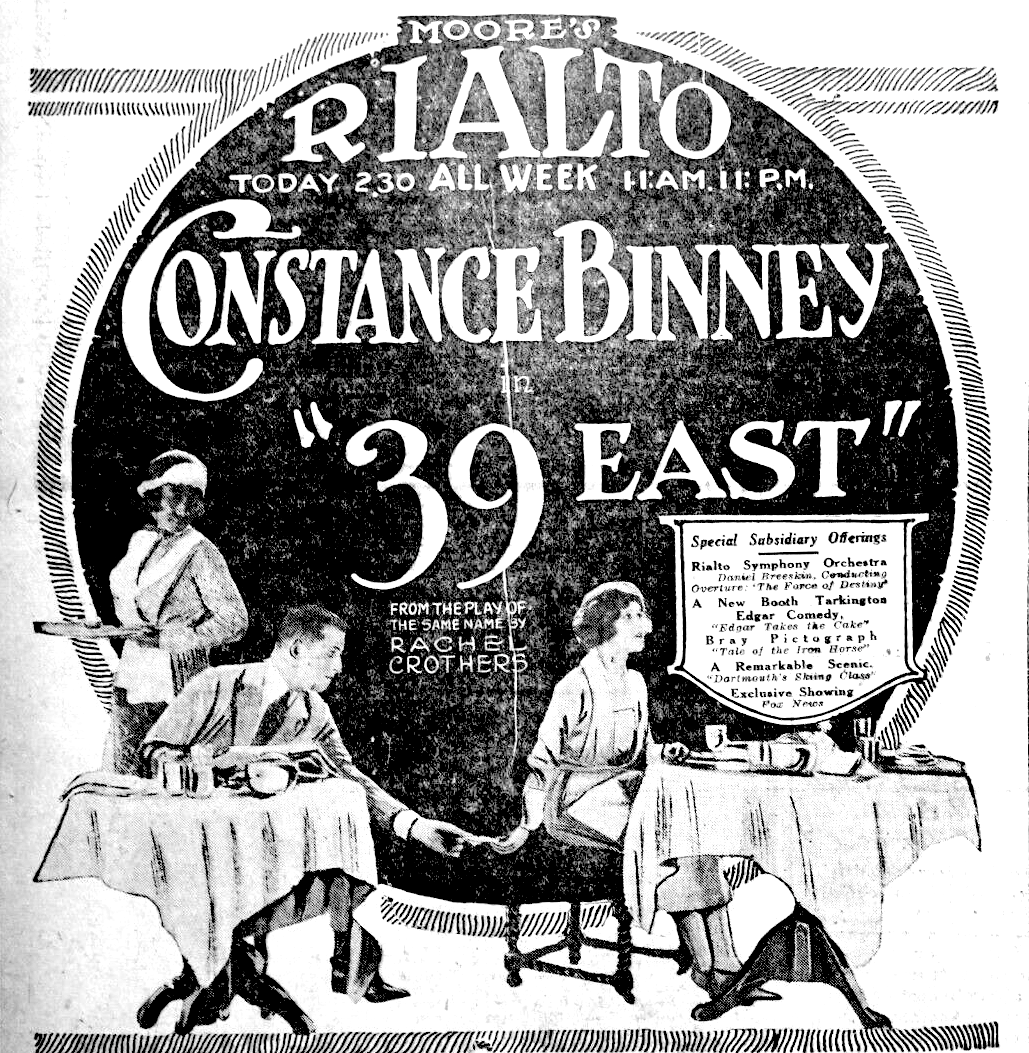
39 EAST (1919)
Logline: A young girl pursues an acting career while staying in a New York boarding house.
Author: Rachel Crothers | Original Director: Rachel Crothers
Original Broadway Cast: Constance Binney, Henry Hull, Alison Skipworth, Blanche Friderici, Louis Alberni, and more

Thoughts: Although Rachel Crothers first made a name for herself in the 1900s, the plays for which she is best remembered were all produced in the 1920s and 1930s, by which time she had come to be regarded as one of the most preeminent playwrights of her era. Especially for women — whose evolving social standing in the early part of the 20th century was a focus throughout her work. In 39 East, one of her more popular efforts, she offered a semi-autobiographical tale about an aspiring performer living in a Manhattan boarding house who struggles to make ends meet while hoping to land her big break. And, of course, she also finds love with a kind resident who faithfully pursues her. Today, the whole thing is very clichéd — we know the beats of the romantic arc before they happen, and we anticipate a happy ending with regard to her career well before the third act confirms as such. As a piece of drama, it’s also shockingly casual to the point of being poorly designed, with a lack of conflict in her love story and a slow, uneventful plotting when it comes to the jeopardy of her potential eviction. A lot of this is because the characters — including the heroine, Penelope Penn — are rather dull and ill-defined, especially for the demands of the comedic genre. There’s a little bit of meat on the bones of the conservative women who run the boarding house — as Crothers explores conflicting social mores about commercial theatre in the late 1910s — but the rest of the ensemble, which could have been enlivened by a bevy of unique personalities, is without much comic color or any kind of conceptual distinction. Accordingly, I’m afraid this is one of the weaker plays I’ve covered in this series so far — an unpolished, unrewarding effort that’s truly surprising, considering how interesting and often funny I consider many of Rachel Crothers’ other, later works — like Let Us Be Gay (1929), When Ladies Meet (1932), and even Susan And God (1937), which are more effective at exploring the humanity of women in the interwar period.
Jackson’s Verdict: Insubstantial and not well-crafted.
AS HUSBANDS GO (1931)
Logline: An American tries to break the news to her husband that she’s leaving him for another man.
Author: Rachel Crothers | Original Director: Rachel Crothers
Original Broadway Cast: Lily Cahill, Jay Fassett, Geoffrey Wardwell, Catherine Doucet, Marjorie Lytell, Roman Bohnen, and more

Thoughts: Crothers enjoys a comedic premise here in As Husbands Go, which is about a middle-class wife from Pennsylvania who travels to Europe with her much-married chaperone, only for them to both return months later with new boyfriends. The wife intends to break things off with her husband, but she finds that she’s unable to let him down — he’s so kind and gentle and understanding — and it truly becomes impossible when the new Euro-beau comes to visit and the two men bond, so much so that the beau bows out. So, the wife’s plot to leave her husband fails, rendering the whole episode merely a flight of fancy — and a big mistake if the woman had indeed forsaken the family life she’d taken for granted in exchange for something shinier but inevitably less satisfying. At least, that’s the perspective of the text. And it’s very obviously the text’s perspective because it makes the husband an almost martyr-like character — a good guy who’s so good that he’s beyond reproach. He’s so nice, so loving, so forgiving. It becomes painful to imagine the leading lady hurting him — so the rest of the play, from the moment he’s introduced, finds the audience wishing that he’ll be spared and she’ll come to her senses. As a work of comedy, the tension exists in her deception — the farce of keeping secrets, with the audience ahead of some characters — but as a work of drama, the one-note, overly positive portrayal of the husband plays as clichéd and convenient. He’s more of a device than a fully fledged human being. And I’ve seen this a few times in Crothers’ lesser or middling plays, where she’s terrific at adding complexity to the things she finds complex, like the leading lady, but overly simplistic with the things she values as simple, particularly the things/people she considers to be pure and good. So, it’s fascinating for this play to offer a flawed central heroine… it’s just not fully effective because it makes unsubtle the way we’re supposed to feel, as not everything around her is afforded the same thoughtfulness.
Jackson’s Verdict: Fine premise undone by uneven character work.

SUSAN AND GOD (1937)
Logline: A wealthy socialite returns from a long European trip with a newfound religion.
Author: Rachel Crothers | Original Director: Rachel Crothers
Original Broadway Cast: Gertrude Lawrence, Paul McGrath, Nancy Kelly, Vera Allen, Edith Atwater, Eleanor Audley, David Byrne, Katherine Deane, Frank Fenton, Fred Leslie, Bigelow Sayre
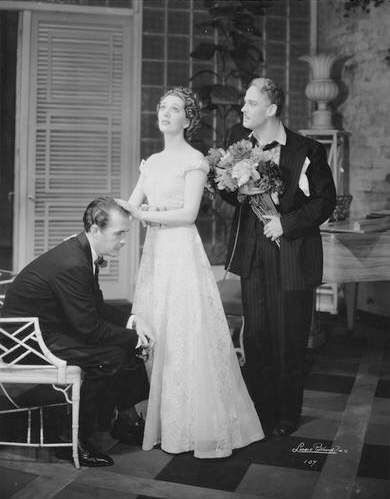
Thoughts: I wrote about Susan And God several years ago in a study of both the original text and MGM’s 1940 film. I stand by what I said then, but rereading the play for this post, and looking at it in the context of Crothers’ career, I appreciate it even more now as a reflection of her style. I especially love the satire — it’s targeted at a shallow and therefore flawed woman who is vapidly drawn to a trendy social movement that nebulously preaches about love, even though she clearly needs to learn how to practice it for real, in person and at home. Now, I still think, like several of Crothers’ plays (e.g., Let Us Be Gay), that the idea is let down by the third act, for the author’s chosen happy ending — the reconciliation of a once-estranged husband and wife — is foisted upon the characters abruptly. And without the satisfying completion of a promised arc for the lead. In particular, the dilemma of having Susan decide between her family and her “movement” shouldn’t just be a simple matter of where she should continue to spend her time. That doesn’t address the problem with this “movement” in the first place — that her shallow understanding of what it means to practice “love” is disingenuous and impersonal. It isn’t merely a matter of her needing to choose family above the outside world (which is, incidentally the shared perspective of Let Us Be Gay and As Husbands Go). No, Susan can only discern what love is by truly exhibiting it at the expense of her religious application. Meaning, the third act should be her having to decide whether to love or “love” her family, and not just by staying/going but actually via her treatment of them in front of other disciples. Here, there’s no scenario where her phony version of love is directly challenged, so the “lightbulb” moment isn’t terribly effective, and the satirical promise of that delicious initial act withers due to a half-earned happy ending… Nevertheless, I still think the concept is excellent, and it’s pure Crothers, as she follows a woman caught between hip social ideas and things that will always matter, like love. That’s Crothers’ focus in a nutshell, and if there’s one thing I would change about what I wrote in 2022, it would be this: even if the plotting isn’t perfect, this is one of her best plays.
Jackson’s Verdict: Great premise — not terrifically plotted, but lots of fun.

Come back next week for another Wildcard! And stay tuned Tuesday for more sitcom fun!