
Welcome to a new Wildcard Wednesday! This week, I’m sharing the latest in my monthly series on midcentury Broadway comedies. For this entry, we’re back with Philip Barry!

IN A GARDEN (1925)
Logline: A playwright decides to recreate a romantic moment between his wife and an old flame as research for a possible new play.
Author: Philip Barry | Original Director: Arthur Hopkins
Original Broadway Cast: Frank Conroy, Laurette Taylor, Louis Calhern, Marie Bruce, Ferdinand Gottschalk, Cecil Clovelly

Thoughts: Despite being one of Philip Barry’s earliest works, In A Garden already exhibits a playwright in firm command of his style, with thoughtful, literate dialogue supported by clear dramatic ideas that its story is carefully designed to explore. And there’s less strain here than in some of Barry’s other early efforts — namely Paris Bound, which makes propositions about men and women that ask for nuance while lacking a well-considered foundation of common sense. That is, I think In A Garden is among the author’s more rhetorically cohesive and cogent works, thanks to strong, perhaps extreme, characters whose choices, even when surprising, always move in accordance with their established definitions and the overarching drama of an artist who cavalierly ponders and then contextualizes his life to such an extent that he kills its humanity. Everything about the story works to this same thesis, following a playwright who decides to explore a dramatic concept (put in his head by a fellow writer) — carefully recreating a romantic moment that once occurred in a shadowy garden between a lothario and a young woman who later married another man. Only, that young woman was the playwright’s own wife. And by being so clinically, rationally certain — from a dramatist’s perspective — that the recreation of this memory will kill any power it maintains in her heart, the playwright ends up alienating his wife entirely. Not pushing her into the arms of the other man, but merely away from his, for he wasn’t actually testing her love, but observing her as a dramatic subject. That focus on drama over humanity is the very problem in their marriage and his central flaw as a character, which he also discovers over the course of this comedy — a comedy that has laughs, but is quite poetic and serious too, daring to not assure its audience of a happy ending. Of course, a lesson is learned, and everything at Barry’s disposal is used to support it — with wit, wisdom, and a beautiful command of language that renders this a well-made text.
Jackson’s Verdict: This is one of Barry’s best-written early efforts.

SPRING DANCE (1936)
Logline: Sorority girls spring into action to help their sister tie down her anti-marriage beau.
Author: Philip Barry, from the play by Eloise Barrangon and Eleanor Golden | Original Director: Jed Harris
Original Broadway Cast: Louise Platt, Richard Kendrick, Jose Ferrer, Martha Hodge, Tookie Hunter, Ruth Matteson, Philip Ober, Peggy O’Donnell, Mary Wickes, Jack Warren, Brooks Bowman, Marie Bruce, Tom Neal
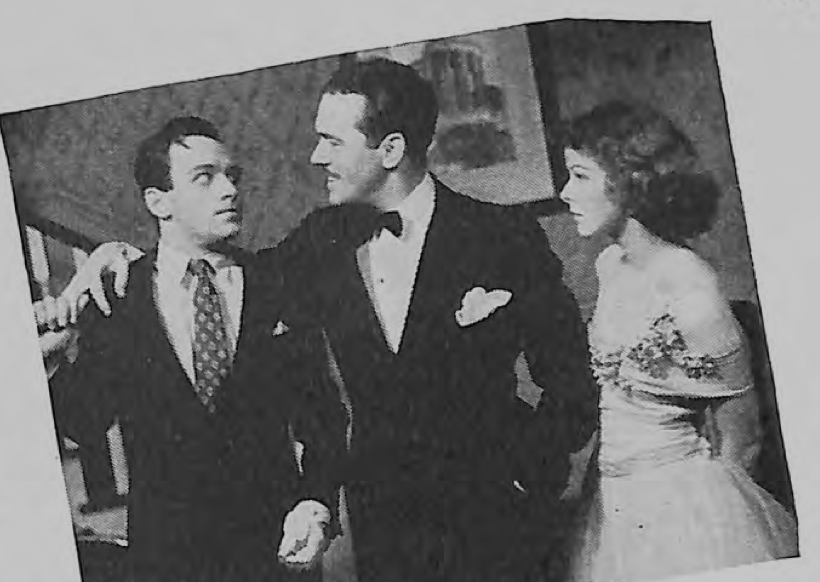
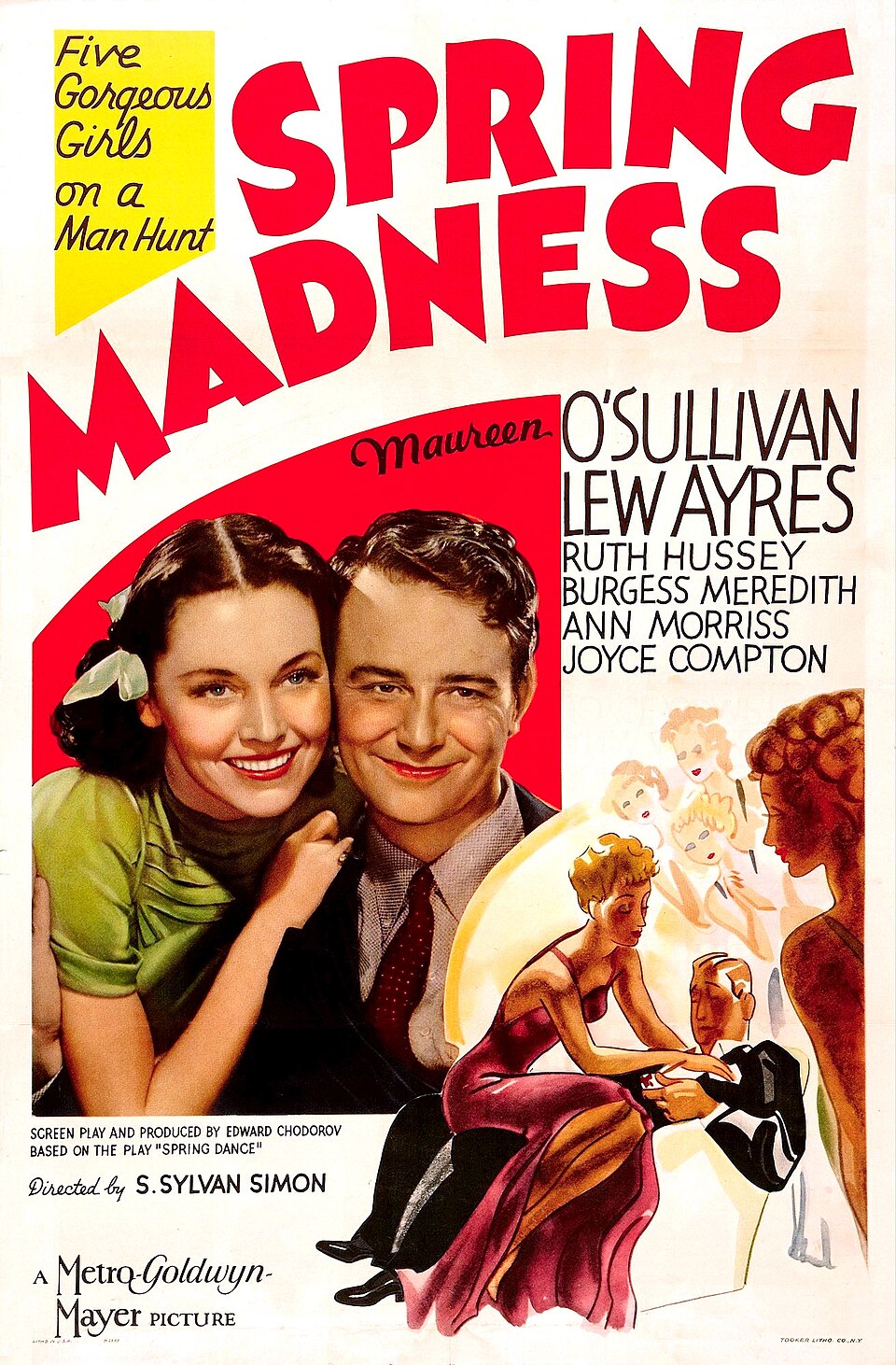
Thoughts: This collegiate rom-com adapted by Philip Barry from an earlier play has a collection of decently fun characters, most of whom spout snappy dialogue that makes an otherwise traditional rom-com plot feel a little quicker and cleverer than it actually is. The story essentially follows a group of sorority girls who help their shyer sister land her beau by delaying his planned trip to the Soviet Union (he’s a typical college lefty and this is pre-Cold War, after all) and making him jealous of a helpful professor. It’s nothing new or exciting. But, again, the writing elevates the material, and the character work is decent for this kind of show. In fact, reading Spring Dance for this post makes me want to go back and re-read Brother Rat, another college-set comedy that also opened in 1936. I was pretty harsh on it the first time, but it was much better received than Spring Dance — and director George Abbott was known for having a better “picker” — so I think at some point I need to compare that text to this one. But I digress… For this entry, I’d say this play isn’t anything special, but it seems to me more enjoyable than a lot of stuff from this era and/or this specific subgenre, so that’s got to be a credit to Barry and his work, in particular. Even as, frankly, this doesn’t really seem like Barry’s work. In fact, of all his plays I’ve read so far — I think this is the seventh — this is the one I’d least associate with his usual ethos. Perhaps that’s what appealed to him… At any rate, this play was adapted into the 1938 film Spring Madness but it’s otherwise one of those forgotten midcentury efforts that, like the above and the below, this blog series was conceived to cover!
Jackson’s Verdict: This is an above-average text for this type of play.
FOOLISH NOTION (1945)
Logline: An actress preparing to marry her leading man is shocked to learn that her missing husband may still be alive.
Author: Philip Barry | Original Director: John C. Wilson
Original Broadway Cast: Tallulah Bankhead, Donald Cook, Henry Hull, Aubrey Mather, Joan H. Shepard, Mildred Dunnock, Barbara Kent, Maria Manton

Thoughts: With a winning premise and an imaginative fantasy-laden plot that both reveals character and allows for clever staging, Foolish Notion would have been an above-average pick for star Tallulah Bankhead. The Alabamian only had a handful of truly great plays in her career and, though not critically lauded nor enduring as a piece of theatrical drama, this one at least came from a good pedigree in Philip Barry. He was again writing about drama-makers — with Bankhead playing an actress who’s preparing to go off on a South American tour with her scene partner and fiancé, whom she intends to marry. The only thing left to do is have her husband declared legally dead — as he’s been missing for five years after joining the Allied cause in Europe. But when a telegram arrives announcing an imminent visit from him and someone called Flora, the wife, her fiancé, her adopted daughter, and her professor father all separately imagine what this upcoming visit will entail. This presents a fine opportunity to explore their varying hopes and fears. The fiancé worries that she will run back to her husband’s arms. The father, who just wants his daughter happy, imagines a visit that frees her up to marry again. The daughter has a nightmare about the lovers plotting to kill her father. And the leading lady herself reconciles with her own guilt over not being a great wife and mom as she imagines her husband shipped back to her in an urn. These fantasy sequences all begin with each subject sitting in a chair that faces the audience, staring at a portrait of the missing man whose reflection the audience sees in an upstage mirror. It’s a unique setup that also helps delineate the various fantasy sequences, prior to the eventual climax where the actress is finally allowed to shed both her obligation to her husband and her insecurities about the relationship. It’s a happy ending, with an arc for her character via her resolution to finally, at last, live in the present instead of the past or future. Okay, that part is a little trite and ham-handed. So is a lot of the writing, actually. This isn’t one of Barry’s most artful in terms of theme or even language. But it’s the premise and structure that saves it, along with the possibilities offered to performers, like the stars who kept the original production afloat. Otherwise, it’s better conceptually than actually.
Jackson’s Verdict: This play’s value is carried more by its concept than its specifics.

Come back next week for another Wildcard! And stay tuned Tuesday for more sitcom fun!