
Welcome to a new Sitcom Tuesday and the continuation of our series of posts on the best episodes from The Cosby Show (1984-1992, NBC), the early linchpin of the peacock network’s Must-See-TV lineup and a show often cited as responsible for resurrecting the situation comedy! I’m happy to report that all seasons have been released on DVD.

A doctor and a lawyer juggle their two careers with the raising of their five kids. The Cosby Show stars BILL COSBY as Cliff Huxtable, PHYLICIA RASHAD as Clair Huxtable, LISA BONET as Denise Huxtable, MALCOLM-JAMAL WARNER as Theo Huxtable, TEMPESTT BLEDSOE as Vanessa Huxtable, KESHIA KNIGHT PULLIAM as Rudy Huxtable, and SABRINA LE BEAUF as Sondra Huxtable.

After two years of fantastic writing that managed to avoid the pitfalls common to many domestic sitcoms of the era, the third season of The Cosby Show represents a major decline for the series, marking the beginning of the show’s coasting on a reputation not legitimized by the material currently being produced. But I try to be fair; I’d usually excuse the disastrously unenjoyable writing by citing the inequitable juxtaposition of this year against the two prior (or, in other words, I’d say that this isn’t as bad a season when not directly compared to the much superior first two). However, I’m in no mood to exonerate this guilty party, because the difference in Season Two and Three is so glaring. It’s not just expectations that have wounded The Cosby Show — it’s The Cosby Show that’s wounded The Cosby Show. What was once a relatable comedy populated with well-defined characters (even the kids, and you know that’s high praise coming from this author), has become a tired smile-edy (on its best days) populated with only a few amusing and story-inspiring characters. There’s no question about what’s gone wrong here. It’s everything. The stories are dull. The laughs are few. The mediocrity is suffocating.
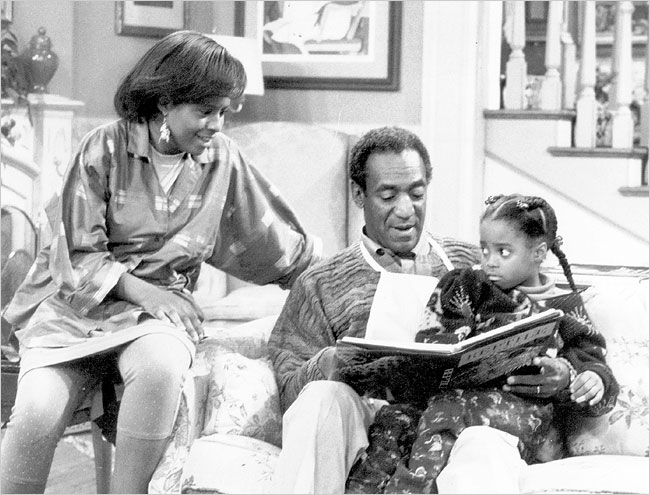
Okay, I’ll cut the dramatics and instead try to explain why the third season is odious. The first reason is obvious — some of the better characters are missing for a large chunk of the season. Lisa Bonet’s Denise, one of the series’ bright spots, has gone away to college, and although she’s still credited as a regular, she only appears in less than half of the installments produced for the season. And yet, even though we’re fundamentally off-balance without her, it also makes little sense to see her as much as we do (the girl is supposed to be in school, right?), making it a no-win situation for the series. (Of course, as many of you know, next season Bonet became the star of the spin-off A Different World, which initially revolved around her exploits at Hillman College — we won’t be discussing that series here, but it will be brought up a few times.) The other character who’s not around as much as we’d like is Clair, played by Phylicia Rashad, who has clearly not been given the TV-actresses’ memo about timing your off-screen pregnancies around the production season. (Conceiving in late summer, delivering in late spring, thus being able to appear in every episode.) She’s only completely absent for two full episodes, but she’s a non-factor (that is, appearing in less than two small scenes) for the entire middle third of the season. The episodes in which she’s underused rely too much on the three remaining kids and are therefore a near collective disaster — middling, forgettable, and plodding.
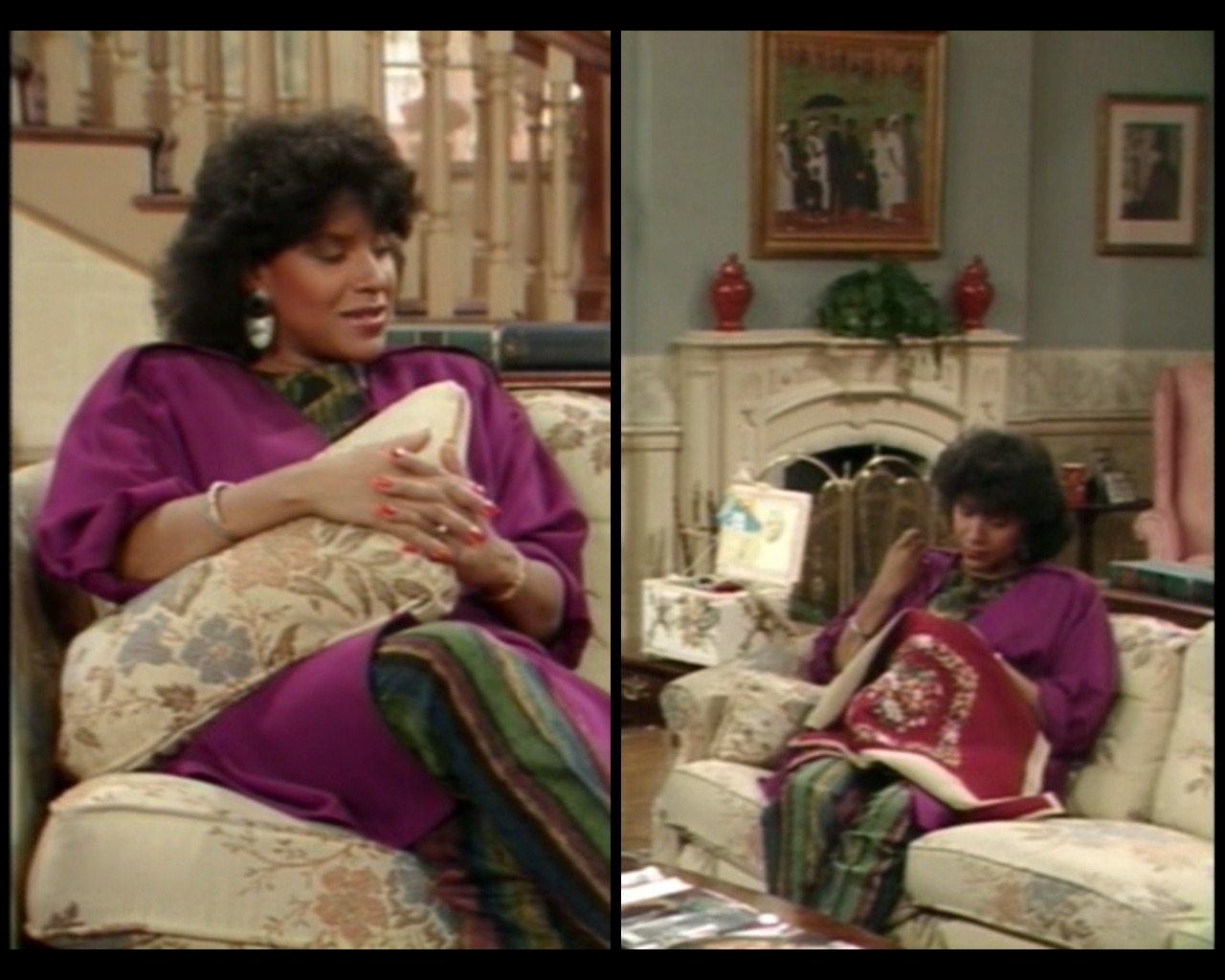
The only flashes of the show’s former vitality come at the very beginning of the year (pre-Rashad’s maternity leave), for even in the latter third of the season once Clair is back, the quality has been reduced so much that a return to form seems impossible. Yet while I would credit the diminished uses of both Clair and Denise as impacting the show’s quick descent in Season Three, I wouldn’t cite this as the primary problem with the year, or the series. (Again, if the truncated ensemble was the main issue, the episodes in which everyone is present would be brilliant. But they’re not.) So aside from the cast issues, the only other excuse concoctable for this season’s inferiority is that the show’s reputation has gotten the better of it. There’s a more conscious effort this season to preach, I mean, teach some valuable life lessons through these fictional children. It’s very after school special-ish and reflects precisely what comes to mind when we think of ’80s sitcoms. It’s ironic that this series, which I’d actually credit for helping to define the sitcoms of the decade, is being destroyed by the very style it created. Am I being overdramatic again? Perhaps, but there’s a better question to ask: Can the show ever rebound from this season? Well, you’ll have to stay tuned… In the meantime, I have picked ten episodes that I think exemplify this season’s strongest installments. For new fans, this list will give you a place to start. For seasoned fans, there might be a few surprises.

Here are my picks for the ten best episodes of Season Three. (They are in AIRING ORDER.) Note that 18 of the 25 episodes this season are directed by Jay Sandrich. Any outings that have been chosen but aren’t directed by Sandrich will be noted below.
01) Episode 50: “Bring ‘Em Back Alive” (Aired: 09/25/86)
The Huxtable house is in an uproar over a snake in the basement.
Written by Matt Williams

Season Three begins with considerably less spark than the debuts afforded to the first two years, but it’s not clear based on this episode that the third season is to be as dire as it will quickly prove. In fact, this episode would suggest that the third season will be, if not a slight comedown from the first two years, still a respectable situation comedy with laughs that come from characters and their established traits. One of the obvious reasons that this installment feels so good is that both Denise and Clair are still around, so the episode visually and structurally looks like the first two seasons — something that can’t be said for the majority of the year. The premise itself is decently relatable and many laughs are present in support.
02) Episode 51: “Food For Thought” (Aired: 10/02/86)
Clair intimidates Cliff into a diet and Denise prepares to leave for school.
Written by John Markus

Chosen as the year’s MVE, I must warn you that this honor should be taken with fewer grains of salt than usual, for in this season of mediocrity (a sitcom sin of the highest magnitude, as regular readers know), there really aren’t any episodes that stand out above the crowd, which is usually the case in these years of lesser quality. However, this is the episode that has the fewest things working against it. Once again, we’re starting with a story to which many people can relate (I know dieting is something with which I’m all too familiar) and the script is able to derive laughs from not just the scenario, but from the utilization of the characters within the scenario. Also, some seasonal continuity: Denise readies to go away to Hillman College.
03) Episode 52: “Golden Anniversary” (Aired: 10/09/86)
The Huxtables plan a celebration for Cliff’s folks’ 50 anniversary.
Written by Carmen Finestra

A follow-up to last season’s memorable installment (which tops many fans’ best-of lists) in which the Huxtable family celebrates Cliff’s folks’ anniversary by lip synching to a Ray Charles song, this episode gives us another lip sync — this time to James Brown’s “I Got The Feelin’.” The gag is obviously not original, but the episode employs it intentionally, aiming for viewers to recollect that a number was performed last season. I think it’s just as comedic as the one prior, and even though it’s a cheap gimmick and the surprise/novelty factor is no longer present, if one were to watch this episode before last season’s anniversary episode, it’s very possible that he/she’d like this one better. (But don’t quote me on that one — this is Season Three, after all!)
04) Episode 56: “Theo’s Flight” (Aired: 11/06/86)
Clair agrees to let Theo take flying lessons while Rudy bosses around her new beau.
Written by Gary Kott | Directed by Tony Singletary

I’m skeptical about sitcom episodes involving aviation (unless we’re talking about the big commercial airliners) because I find the use of flight to be very gimmicky — jumping out of planes, taking flight lessons, parachuting — these are big grand sight gags and as a viewer, I’ve been “burned” by them in the past, mostly because the incorporation of this plot element often requires a disregard for logic. So I walk into this offering not enthused about the premise — and I walk out still unenthused about the premise, but glad that it didn’t do the hammy hijinks that it could have. Rather, I like the subplot with Rudy and the introduction of her funny recurring boyfriend, Kenny (Deon Richmond), whom she bosses around and calls “Bud.” Comedic.
05) Episode 60: “War Stories” (Aired: 12/11/86)
Cliff plays pinochle and Vanessa is caught between two guys.
Written by Matt Robinson

Now that we’re in the middle Clair-lite portion of the season, one can see the writers trying to play to perceived strengths from the year prior (and the fact that these don’t quite work is a testament that Season Three’s issues can’t be blamed on the cast absences). This offering aims to replicate the hysterical pinochle game that Cliff played alongside Roscoe Lee Browne in last season’s “The Card Game,” but without Browne or the idea’s freshness, the laughs are considerably reduced. I surprisingly find more to enjoy in the plot with Vanessa, who prepares for a date with a new beau (the comically goofy Tyrone, who has trouble pronouncing “Huxtable”) only to decide she’s more interested in another. Guess what? There are laughs!
06) Episode 64: “Say Hello To A Good Buy” (Aired: 01/22/87)
Cliff tries to play down his wealth when they go to buy a new car.
Written by John Markus, Carmen Finestra, and Matt Williams | Directed by Tony Singletary

This is definitely the strongest of the middle stretch of episodes in which Clair Huxtable either appears briefly or doesn’t appear at all. Much of this has to do with the script itself, which is written by the show’s (then) three strongest writers, Markus, Finestra, and Williams, whose work is often unbeatably funny when founded upon the right ideas. This episode, with a very amusing premise about Cliff trying to get a better deal on a new car by not revealing his level of wealth — only to be ruined by a character played by the unforgettably voiced Gilbert Gottfried — was the most watched episode of the entire series, with nearly 65 million viewers tuning in that evening. (Sinbad plays the dealer.) Is this a great episode? No. But it’s close.
07) Episode 65: “Denise Gets An Opinion” (Aired: 02/05/87)
Denise has a blind date and Vanessa’s ex boyfriend hopes to win her back.
Written by Gary Kott | Directed by Tony Singletary

There’s a half-baked misunderstanding at the crux of one of this installment’s two primary stories, and it, frankly, works more on principle instead of any particulars to its execution. (That’s this list in a nutshell!) Denise mistaking Cliff’s medical student for her blind date is a comedic idea, but it doesn’t really go anywhere. Yet the same can’t be said of the story in which Robert, Vanessa’s boyfriend from last season, hangs around making a nuisance of himself so that he can reconcile with her. Initially an idea that looks unrewarding, the story concludes in a shockingly nuanced and believable scene where she gently turns him down and asks to remain friends. There’s no grand development, just an everyday conversation. And thats why I like it.
08) Episode 69: “Cliff’s 50th Birthday” (Aired: 03/12/87)
An old grudge threatens to ruin a dinner party in honor of Cliff’s 50th birthday.
Written by Gary Kott | Directed by Carl Lauten & Reggie Life

I really wish this episode was better than it was (but heck, that could apply to every episode on this list, and every episode on every list) because it’s an adult-focused script with more substantive material thrown to Cliff and Clair, something we don’t see a lot at this point in the show’s run (especially in Season Three, in which we’re never completely sure that Clair will be around for two scenes in a row). But this premise isn’t something that The Cosby Show usually does, and unlike the atypical offerings from better seasons, which actually have a chance of thriving, this rotten season doesn’t have the goods to back up a story that’s decent, but doesn’t really gel. That’s how I feel about this episode, which like the season, is (a qualified) “good.”
09) Episode 70: “I Know That You Know” (Aired: 03/19/87)
Elvin and Sondra conspire with the rest of the family to pull a practical joke on Cliff.
Written by John Markus, Carmen Finestra, and Matt Williams

Although a very story-driven installment (as these prank war type of episodes usually are — because they’re all about the plot points and the machinations of the convoluted scheming), it would be difficult to deny that this is the funniest and most rewarding installment of the back third of the third season, in which Clair is present, but the show still isn’t able to “right” the tragic course it had begun earlier in the year. Also, this is a somewhat important episode in terms of the narrative development, as Sondra and Elvin officially become engaged. This is a welcome beat because Elvin has a comedic relationship with both Cliff and Clair, and he’s the only thing that actually helps make Sondra an interesting character. Plenty of laughs here.
10) Episode 73: “Planning Parenthood” (Aired: 04/30/87)
Cliff takes Rudy and her friends to a fancy restaurant.
Written by Elizabeth Hailey & Oliver Hailey

Echoing what I said above about Cosby’s ability to play off children, and Keshia Knight Pullman’s Rudy especially, this enjoyable excursion works because of the premise, which finds Cliff taking Rudy and her friends, including the always riotous Kenny (“Bud”) to a fancy restaurant where they proceed to do all the embarrassing things that you’d anticipate. The script doesn’t actually hit any new or surprising beats, or grant us any spectacular laughs that we otherwise weren’t expecting, but it also doesn’t do anything to forsake that which the premise already engenders. And because we’re in a year where anything positive deserves to be recognized (because it’s, unfortunately, in short supply), this episode looks like a clear winner.
Other notable episodes that narrowly missed the list above include: “Man Talk,” a solid Theo-centered story, Vanessa’s Rich,” which has an interesting premise but a script that’s not comedically satisfying, and “Bald And Beautiful,” which is notable for the guest appearances of Ann Reinking and Robert Culp (Cosby’s former I Spy co-star), and a major sight gag involving Theo and Cockroach’s shaved heads. (Grading degrees of mediocrity isn’t easy and, worse, it isn’t fun, but that’s what Season Three required for picking both this list and these three honorable mentions.)

*** The MVE Award for the Best Episode from Season Three of The Cosby Show goes to…..
“Food For Thought”

Come back next Tuesday for the best from the fourth season! And tune in tomorrow for a new Wildcard Wednesday post!